
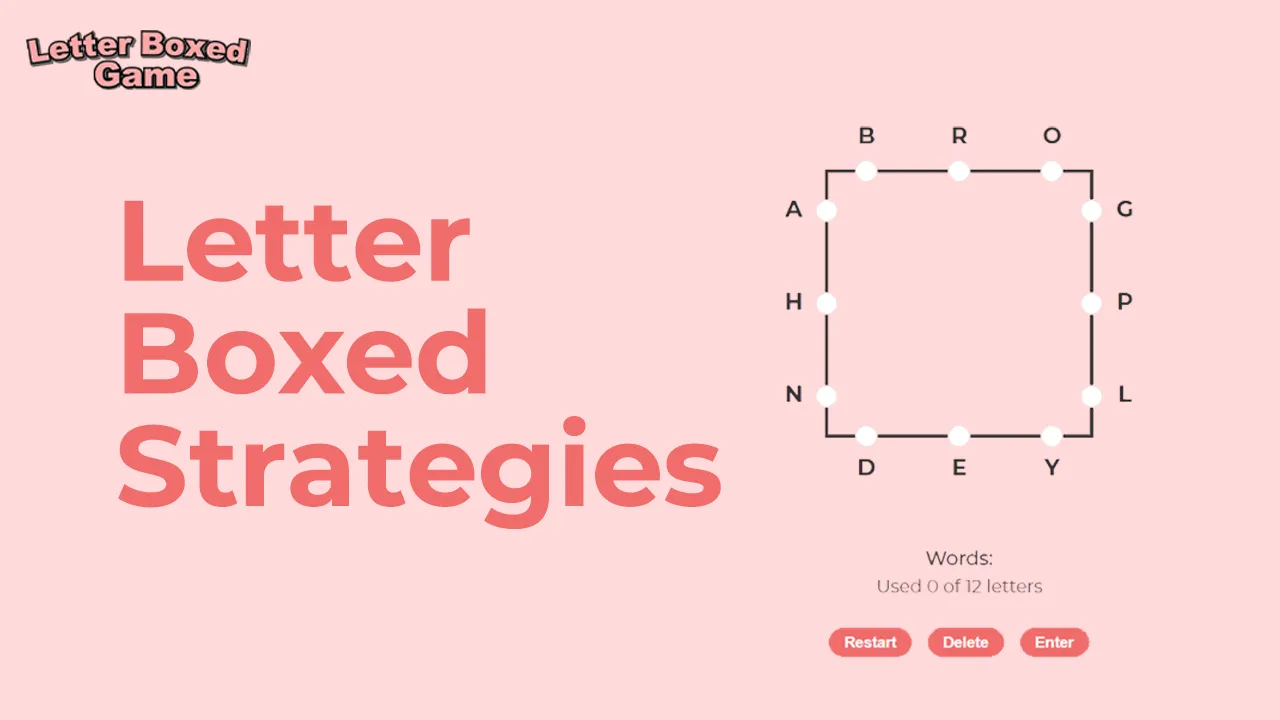
Why Letter Boxed Is a Game of Strategy, Not Just Words
Thinking Ahead Beats Pure Vocabulary
Many beginners assume success in Letter Boxed depends only on knowing a lot of words. In reality, the game’s rules transform each puzzle into a logic challenge. Planning letter transitions, predicting future connections, and managing difficult letters matter more than raw vocabulary. If you want consistent success, strategy must come first.
Mastering Letter Flow and Word Linking
Each new word must begin with the final letter of the previous one, while also switching sides of the box. This makes letter flow and chaining essential skills. Strong players visualize possible transitions before entering their first word, which helps prevent mistakes and blocked paths later.
Core Strategies Every Player Should Learn
Choosing a Strong Opening Word
The first word often determines how smooth the rest of the puzzle will be. Scan the board and look for a word that touches multiple sides and removes difficult letters early. A well-chosen opener creates flexibility for all remaining moves.
How to Avoid Dead-End Words
A dead end occurs when your word leaves no valid letter to continue. To avoid this, always ask yourself what letters remain usable after your move. Shorter, adaptable words early on usually keep more options open than forcing long words too soon.
Identifying Powerful Connector Letters
Some letters naturally link to many others. Letters like S are especially valuable because they form plurals and common endings. Building your word chains around these connectors increases your chances of smooth transitions.
Advanced Letter Boxed Techniques (2–4 Word Solutions)
How Two-Word Solves Really Work
Solving a board in just two words requires careful planning. The key is to deal with rare letters early, ensure each side contributes efficiently, and design both words so they complement each other. Every letter must serve a purpose.
For players looking to experiment with different strategies and practice without limits, Letter Boxed Unlimited is the perfect way to test new word chains and refine your solving techniques.
Using Bridge Words to Unlock the Board
Bridge words act as connectors between awkward letter combinations or opposite sides. A single word containing a hard letter like Q, K, or J can open the path for the rest of the puzzle when used strategically.
Building a Mental Map Before You Play
Instead of guessing, visualize the board as a map. Take note of where each letter sits, which ones can connect easily, and where problems might arise. This mental planning reduces trial-and-error and speeds up solutions.
Leveraging Prefixes, Suffixes, and Roots
Common prefixes (re-, un-, ex-) and suffixes (-ed, -ing, -ly) help extend words without breaking the chain. Recognizing word roots allows you to build longer, flexible words while staying within the rules.
Pattern-Based Solving Methods
Vowel Bridge Strategy
Vowels often act as connectors between clusters of consonants. Planning how and when to use vowels early helps prevent situations where remaining letters cannot form valid words.
Prioritizing Rare Letters
Letters like Z, Q, J, and K are harder to place. Target them while you still have options rather than saving them for the end, where they often become blockers.
Vowel-to-Consonant Flow
Ending a word with a vowel and starting the next with a consonant often creates smoother transitions. This simple pattern increases consistency in word chaining.
Recycling Letters on Difficult Boards
Some puzzles require reusing certain letters. Choose letters that appear in many common words, allowing you to reuse them without limiting future moves.
Side-Switching: The Key to Clean Solutions
Why Intentional Side Changes Matter
Because consecutive letters can’t come from the same side, careless moves quickly lead to failure. Purposeful side switching keeps your options open and maintains balance across the board.
Predicting Your Next Available Letters
Before committing to a word, imagine what letters will remain playable afterward. Thinking one or two moves ahead dramatically reduces wasted attempts.
Sample Strategy Walkthroughs
Easy Board: Three-Move Solution
- ➥ Start with a short word connecting two sides.
- ➥ Use a vowel-heavy word to open remaining paths.
- ➥ Finish by clearing leftover rare letters.
Medium Board: Two-Move Solution
- ➥ Begin with a bridge word using a rare letter.
- ➥ Complete the puzzle with one long connecting word.
Hard Board: Step-by-Step Planning
- ➥ Visualize all letters and sides.
- ➥ Identify priority letters early.
- ➥ Build chains that unlock new options.
- ➥ Adjust using side-switching when needed.
Improving Your Skills Without Cheating
Using a Thesaurus for Smarter Connections
A thesaurus helps uncover alternative words that fit tricky transitions. It expands your options without spoiling the challenge.
Creating a Personal Word Bank
Keep track of reliable connector words you encounter often. Familiarity speeds up recognition and decision-making.
Tracking Patterns Over Time
Writing down successful patterns, endings, or strategies builds long-term improvement and consistency.
Common Strategy Mistakes (and Fixes)
Relying Too Much on Long Words
Long words look impressive but often restrict future moves. Smaller, flexible words usually perform better.
Misjudging Letter Frequency
Common letters are easier to place than rare ones. Use frequent letters early and save difficult ones for planned positions.
Forcing Rare Letters Too Soon
Placing rare letters without a clear plan can trap you. They work best when used deliberately within a controlled chain.
Expert Techniques to Cut Down Solve Time
Solving the Puzzle Backwards
Decide how you want the puzzle to end, then work backward to support that final word.
Planning Around the Final Letter
Identifying your ending letter first helps prevent blocking essential connections.
Reducing Word Count Gradually
Learn which sequences can merge into longer words. This transitionfrom five words to three, then two,comes with experience.
Practice Challenges to Sharpen Your Skills
Once you know the basics, practicing consistently is key. Try the Letter Boxed Daily puzzle to improve your pattern recognition and get into the habit of spotting effective word chains every day.
- Two-Word Challenge: Aim to finish every board in just two words.
- Timed Solve: Complete puzzles within 60 seconds to improve speed.
- Pattern-Only Play: Use only words with prefixes or suffixes.
Final Thoughts
Letter Boxed rewards preparation, pattern awareness, and smart sequencing far more than memorizing words. By applying these strategies consistently, you’ll solve puzzles faster, make fewer mistakes, and develop a confident, repeatable approach that turns each daily board into an enjoyable challenge.